Hilda Sandström
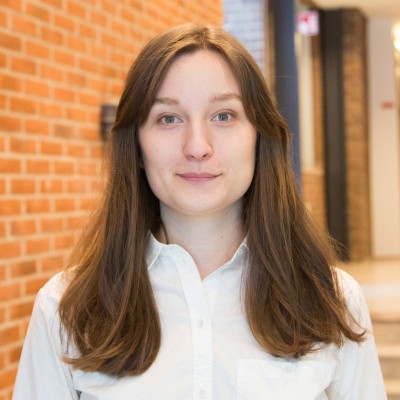
Computational chemist at the Technical University of Munich, working with Prof. Patrick Rinke. My focus is on compound identification methods using a mixture of quantum chemistry and machine learning. My current position at TUM is as a Marie Curie fellow with the project CLOUDMAP, which focuses on improving molecular-level identification of atmospheric compounds with mass spectrometry through data-driven methods. The results aim to advance understanding of chemical processes that drive particle formation, with implications for climate change and air pollution.
Background
I studied chemical engineering with applied physics at Chalmers University of Technology (Sweden), specializing in computational materials science. I obtained my PhD in theoretical chemistry from Chalmers University in 2022. My research focused on developing computational modeling and evaluation schemes using enhanced sampling molecular dynamics, structure prediction, and quantum chemistry calculations in a high-performance computing (HPC) environment to understand polymerization of hydrogen cyanide. This work was performed in collaboration with astrochemists and the Chalmers Initiative for Cosmic Origins (CICO).
From autumn 2022–2025, I worked as a postdoctoral researcher at Aalto University (Finland). My research within the VILMA center of excellence involved developing machine learning methods for improved data-driven compound identification of atmospheric compounds. I was part of the Computational Electronic Structure Theory group at Aalto University and the national center of excellence VILMA (Virtual Laboratory for Molecular Level Atmospheric Transformations).
I have strong expertise in modern quantum chemistry and molecular machine learning/cheminformatics approaches, including molecular descriptor development. I have conducted and supervised several independent machine learning projects end-to-end for predicting spectrometry signals and properties from molecular structures.
news
| May 25, 2026 | Contributed talk at the JpGU-AGU Joint Meeting 2026 (Chiba, Japan): Towards atmospheric compound identification using simulated electron ionization mass spectra. Also served as a poster judge at the meeting. Read more → |
|---|---|
| Apr 28, 2026 | Invited talk at the University of Gothenburg: Data-driven mass spectrometry for atmospheric compound identification. Read more → |
| Mar 30, 2026 | Invited talk at the University of Glasgow (Network on Mathematical Data Science for Materials Science workshop): Data-driven compound identification with atmospheric mass spectrometry. Read more → |
| Mar 11, 2026 | Contributed talk at Chemical Compounds Space Conference (CCSC 2026) (Munich, Germany): Towards atmospheric compound identification using simulated electron ionization mass spectra. Read more → |
| Feb 24, 2026 | First time thesis opponent in Barcelona for Niccolò Bancone (UAB), and Linus’ first first-author paper published. Read more → |